Facebook Marketplace Scam Checker
Use this no-API checklist to estimate risk signals in a Facebook Marketplace deal.
Quick answer
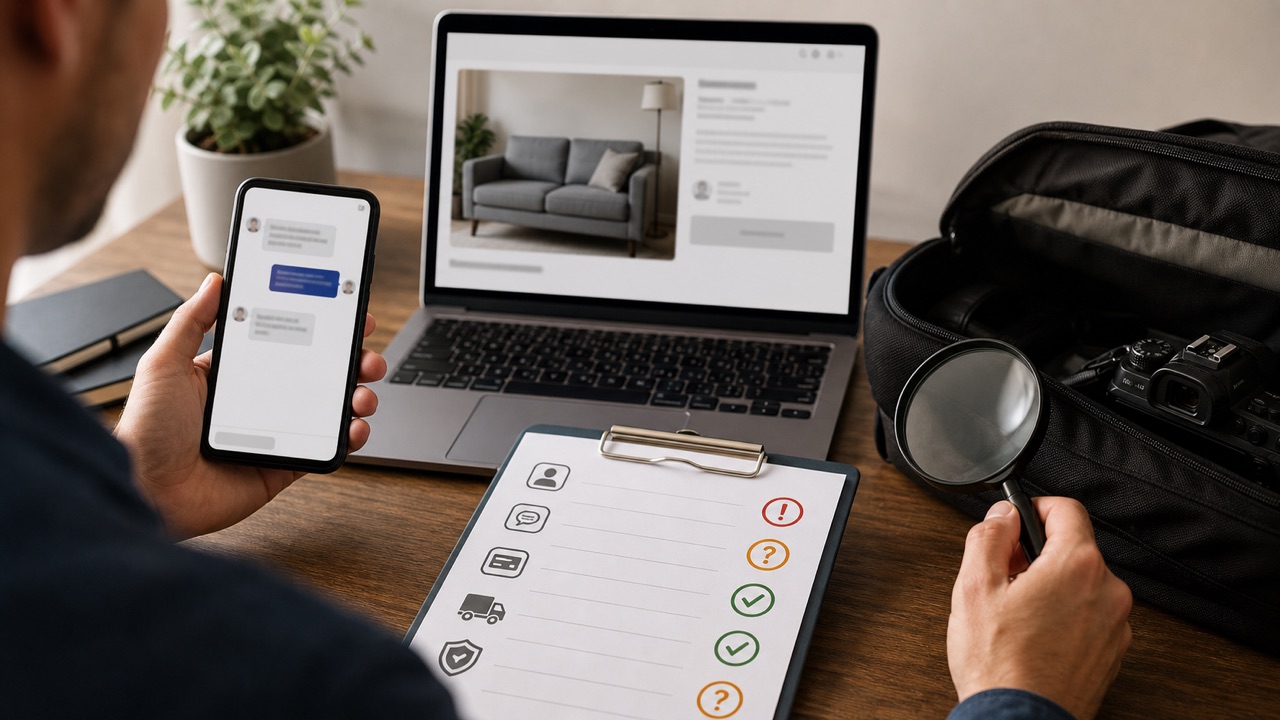
Score the deal by behavior, not by profile appearance. Stop if it includes an advance deposit, off-platform link, verification code, fake payment email, overpayment, gift card, crypto, remote shipping story, or pressure to act before inspection.
What this means
This checker cannot certify a person or listing. It helps identify risk signals that deserve independent verification or an immediate end to the transaction.
Facebook changes labels and rolls out account features gradually. The exact wording on your device can differ from screenshots or older guides, but the underlying task should remain inside the official app, facebook.com, or Accounts Center. Read the page that appears on your own account instead of forcing a menu path that is no longer present.
Step-by-step
- Compare the price with local listings and reverse-check whether photos or descriptions look copied.
- Review profile history, seller activity, item details, and the consistency of answers.
- Keep messages on Facebook and refuse sign-in, payment-upgrade, or identity-verification links.
- Inspect local items and verify payment inside your own account rather than trusting screenshots.
- Stop, preserve the conversation, report the listing or profile, and contact the payment provider if any red flag appears.
Checks before you continue
- A long-lived account can be compromised.
- A below-market price increases the need for verification.
- An email saying money is pending is not proof of payment.
- A stranger never needs a code sent to your phone to prove you are real.
Common reasons it does not work
- Scammers adapt stories after a buyer asks questions.
- Copied vehicle and rental listings can contain convincing real details.
- Off-platform transactions can lose Marketplace reporting and protection options.
If the result is different from what this guide describes, stop and note the exact message. Try the desktop website if the app hides a setting, update the app if a menu is incomplete, and use a familiar device for identity or recovery checks. Avoid repeating the same request many times because temporary rate limits can make diagnosis harder.
Safety and privacy notes
Use this checklist as a decision aid, not as an automated guarantee. Keep sensitive URLs, passwords, payment details, recovery codes, and identity documents out of third-party forms and shared screenshots.
Never use remote-access software or share a screen with an unknown “support agent.” Facebook does not need your password, two-factor code, gift card, or cryptocurrency payment to complete a normal account setting. When a permanent action is involved, keep an independent backup of the information and access records you may need later.
Official source
Review Facebook Help Center: About scams on Marketplace for the latest labels and eligibility rules. This guide explains the process in plain language, but the options displayed by Facebook for your account are the final authority.
Facebook Marketplace Scam Checklist
Risk level
Low visible risk
Use this as a practical warning signal, not a guarantee.
Frequently Asked Questions
Can this prove a listing is safe?
No. It only highlights common warning signs based on your manual answers.