How to Tell If a Facebook Login Page Is Fake
Learn simple checks for spotting fake Facebook login pages before entering your password.
Quick answer
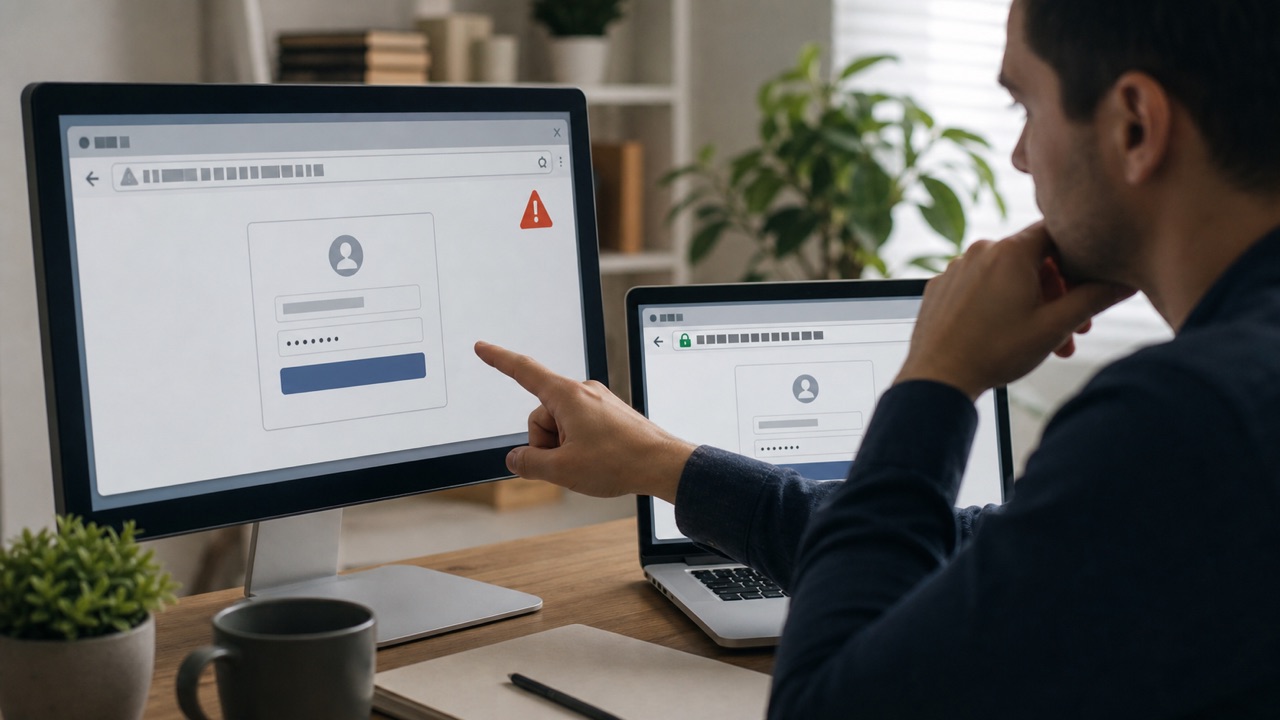
Read the registered domain from right to left and confirm it is facebook.com before the first slash. A padlock, copied logo, and professional design are not enough; fake pages can use HTTPS and reproduce the real layout.
What this means
Phishing pages commonly arrive through urgent security notices, ad-account warnings, Marketplace messages, or shortened links. Their goal is often to collect both the password and the next two-factor code.
Facebook changes labels and rolls out account features gradually. The exact wording on your device can differ from screenshots or older guides, but the underlying task should remain inside the official app, facebook.com, or Accounts Center. Read the page that appears on your own account instead of forcing a menu path that is no longer present.
Step-by-step
- Do not use the message link; open a new tab and type facebook.com yourself.
- Inspect the complete domain and reject look-alikes, extra words, unusual spellings, and unrelated endings.
- Let a password manager check the site because it should fill only on the saved legitimate domain.
- Review the claimed warning inside Support Inbox or Account Status after signing in normally.
- If information was entered on the fake page, change Facebook and email passwords, end sessions, and enable two-factor authentication.
Checks before you continue
- HTTPS encrypts a connection but does not establish the operator's identity.
- A Meta or Facebook logo can be copied in seconds.
- A real support process does not demand gift cards or remote device access.
- Save the suspicious URL without reopening it when reporting the incident.
Common reasons it does not work
- Mobile browsers can hide part of a long address, so tap the address bar to inspect it fully.
- A shortened URL conceals the destination until opened; avoid it when credentials are involved.
- A compromised friend's account can send a malicious link even though the sender looks familiar.
If the result is different from what this guide describes, stop and note the exact message. Try the desktop website if the app hides a setting, update the app if a menu is incomplete, and use a familiar device for identity or recovery checks. Avoid repeating the same request many times because temporary rate limits can make diagnosis harder.
Safety and privacy notes
A legitimate recovery process never requires you to tell another person your password or one-time code. Open Facebook directly, protect the connected email account, and stop if a caller or message creates urgency or asks for payment.
Never use remote-access software or share a screen with an unknown “support agent.” Facebook does not need your password, two-factor code, gift card, or cryptocurrency payment to complete a normal account setting. When a permanent action is involved, keep an independent backup of the information and access records you may need later.
Official source
Review Facebook Help Center: Avoiding scams on Facebook for the latest labels and eligibility rules. This guide explains the process in plain language, but the options displayed by Facebook for your account are the final authority.
Frequently Asked Questions
Can a fake page look exactly like Facebook?
Yes. Always check the domain and avoid entering passwords after clicking suspicious links.